Sometime ago, I wrote about how relatively easy it is to make refried beans. Now that I’ve figured out a recipe for beans that works for me (and by that I mean that it is a wholly vegetarian recipe and it’s super-spicy) I’ve been making refried beans a lot lately. My favourite ways to eat beans include: beans on top of rice, beans inside burritos and quesadillas, and even just beans on more beans with lots of cheese on top 🙂 And then of course, there is the refried bean pizza 🙂
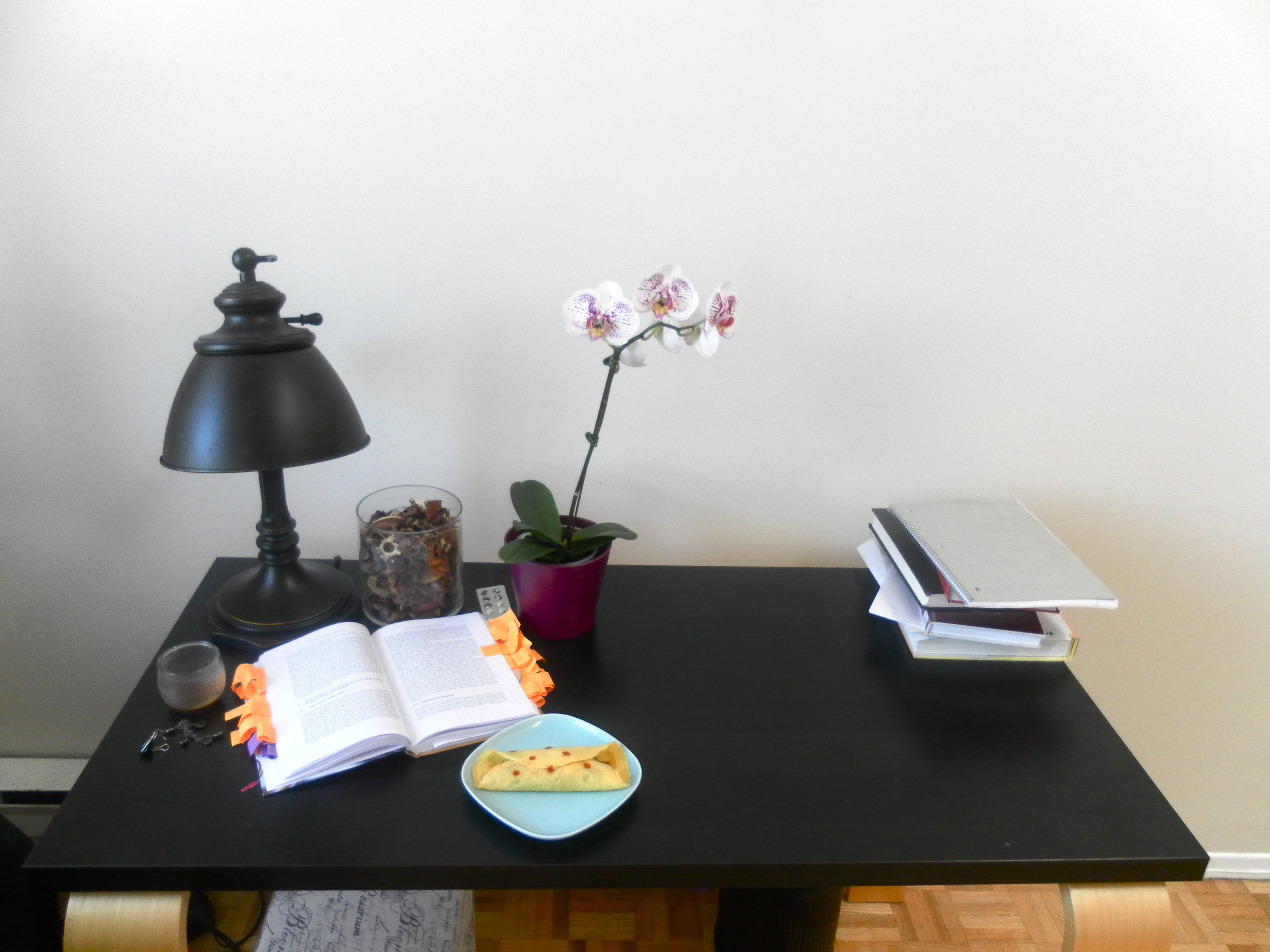
My latest bean-related experiment involves mixing two iconic foods from Mexican and French cuisine respectively: refried beans and crepes. Here’s how it turned out:
If you want to try it out, here’s what you will need:
For the Filling:
One serving of re-fried beans, go here for my recipe.
Freshly grated aged cheddar, to taste
Chunks of mozzarella, to taste
1 tsp cayenne pepper
1 tsp freshly ground cumin seeds
For the crepes:
1 cup all-purpose flour (leveled)
1/4 teaspoon coarse salt
1 1/2 cups whole milk
4 large eggs
3 tablespoons unsalted butter, melted
Method:
I started by making the crepes. I just threw all the ingredients for the crepes (in no particular order) into a food processor (you call also use a blender/mixie) and whizzed them all together until I got a smooth mixture. The batter will be pretty thin, quite unlike pancake batter.
Now for making the crepes. I heated a skillet, melted a little butter on it and poured a ladle of batter on it. Then, I swirled the batter about to make a thin layer completely covering the entire skillet. I cooked the underside of the crêpe for about 3 minutes. Using a rubber spatula I loosened the edges of the crepes and then flipped the crêpe over and cooked the other side for about 2 minutes. Then I placed the crêpe on a plate, covered it with plastic wrap and repeated the crepe-making process until I’d used up all the batter. (You can also store the batter in the fridge for a day or two if you prefer.)
Now I was ready to stuff the crepes with their filling! (You can stuff and bake a couple at first and store the rest of the crepes in the fridge. Since they’re all wrapped up in plastic, they will stay fresh.)
But first, I had to pre-heat the oven, which I did to 350 F. While the oven heats up, start filling the crepes with refried beans and cheese and lining them up on a baking tray. To keep the crêpe nicely wrapped and beans snug inside, I used a toothpick.
Once the oven is warmed up, place the crepes in the oven and bake for 10 minutes or so. Monitor them and reduce the temperature, or take them out sooner if they look like they are browning too much. You just want them to be a nice golden colour with the edges starting to crisp up.
Once they are ready, take them out of the oven, sprinkle with cumin and cayenne pepper and enjoy!
If you don’t want to spend the time decorating the crêpe with cayenne pepper and cumin polka-dots like I did, you can just lightly dust the crêpe with the spices:
They made for a perfect snack while working on my dissertation.
One of the things that often irks me about living in North America is how much people seem to plan and organize their social lives. Speaking broadly of course, based on anecdotal evidence from my life, I find that people in India are far more spontaneous. I think there is something nice about being able to phone a friend and make an impromptu plan for the same day once in a while. But, here, more often than not, people plan dinner parties and drinks weeks in advance.
Unfortunately, having to pencil appointments with my friends into my calendar really doesn’t work for my personality. I often find myself feeling tired, or un-social, and want nothing more than to sit on the couch with a book, but end up having to go out because I accepted an invitation weeks ago. People may have gone to considerable trouble to cook for me, or a the very least they’ve set aside time to see me, so I feel compelled to go. At other times, I have a spontaneous urge to go out and see people, but end up staying in, because I haven’t made any plans with anyone.
I realize that part of life is having to do things one doesn’t feel like doing, but when it comes to how we interact with one another, I don’t think it has to be this way, and it isn’t this way in India. Of course, the ‘impromptu system’ I am advocating has its own drawbacks. In spite of its flaws however, I prefer this system to what I see as an overly organized North American model.
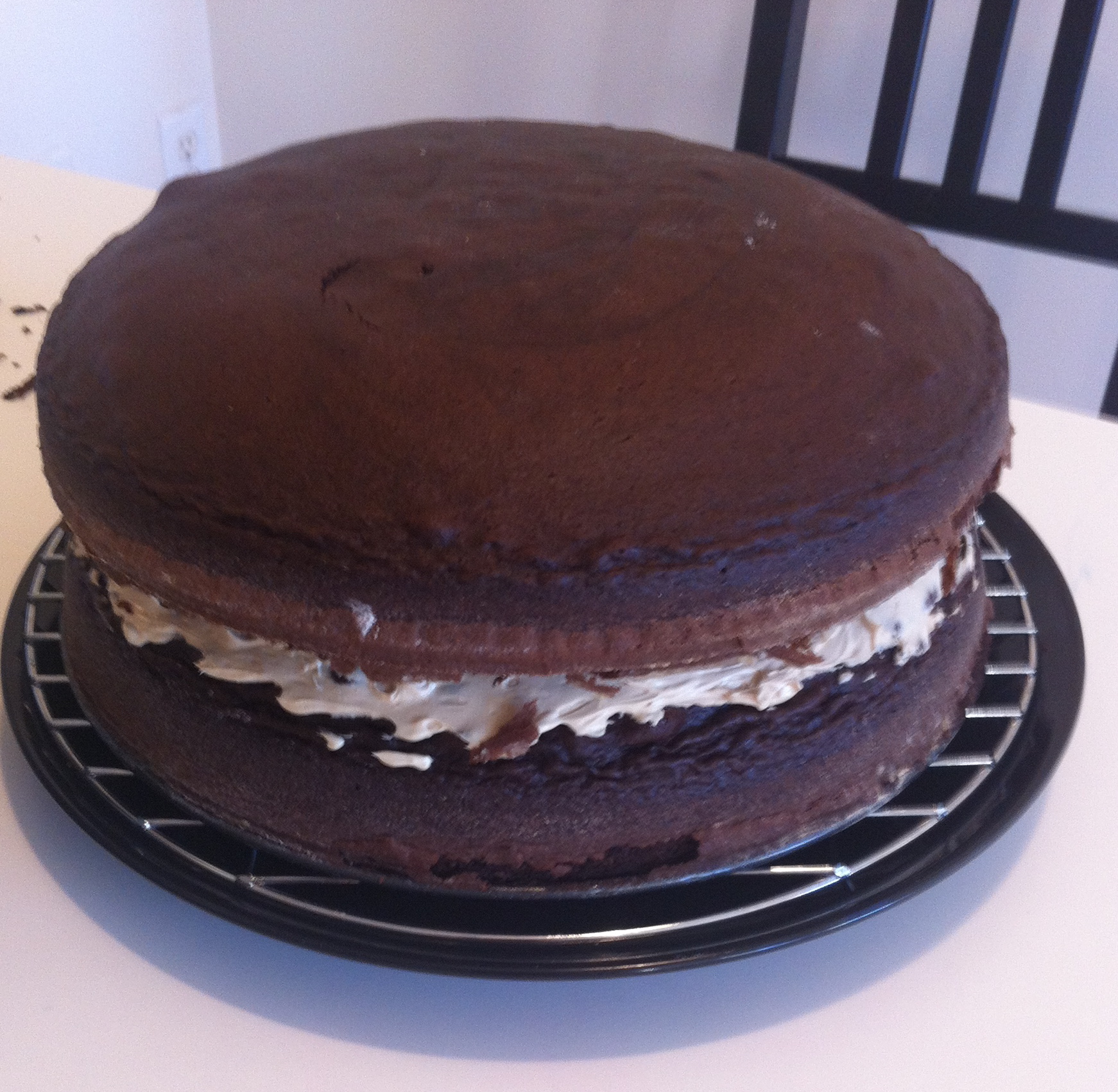
Luckily, that’s all it is, a model; which means not everyone follows it and I’ve managed to find a few people here who like spontaneity once in a while too 🙂 All of this has meant that last evening, I was able to indulge in one of the small, simple joys of life, namely throwing an impromptu soiree. The plan was made frantically, over multiple text messages, sometime last afternoon. After which, I could be seen running about trying to throw some snacks together. Since spontaneity was the theme, I even decided to bake a cake! It turned out pretty well, but what I really liked about it was the icing, so I thought I would share the recipe here with you 🙂
Ingredients:
1 Chocolate Cake
4 Eggs
1 Cup Sugar
2 Pinches of Salt
3 Sticks of Butter
1 tsp Vanilla Essence
1 tbsp Instant Espresso
Method:
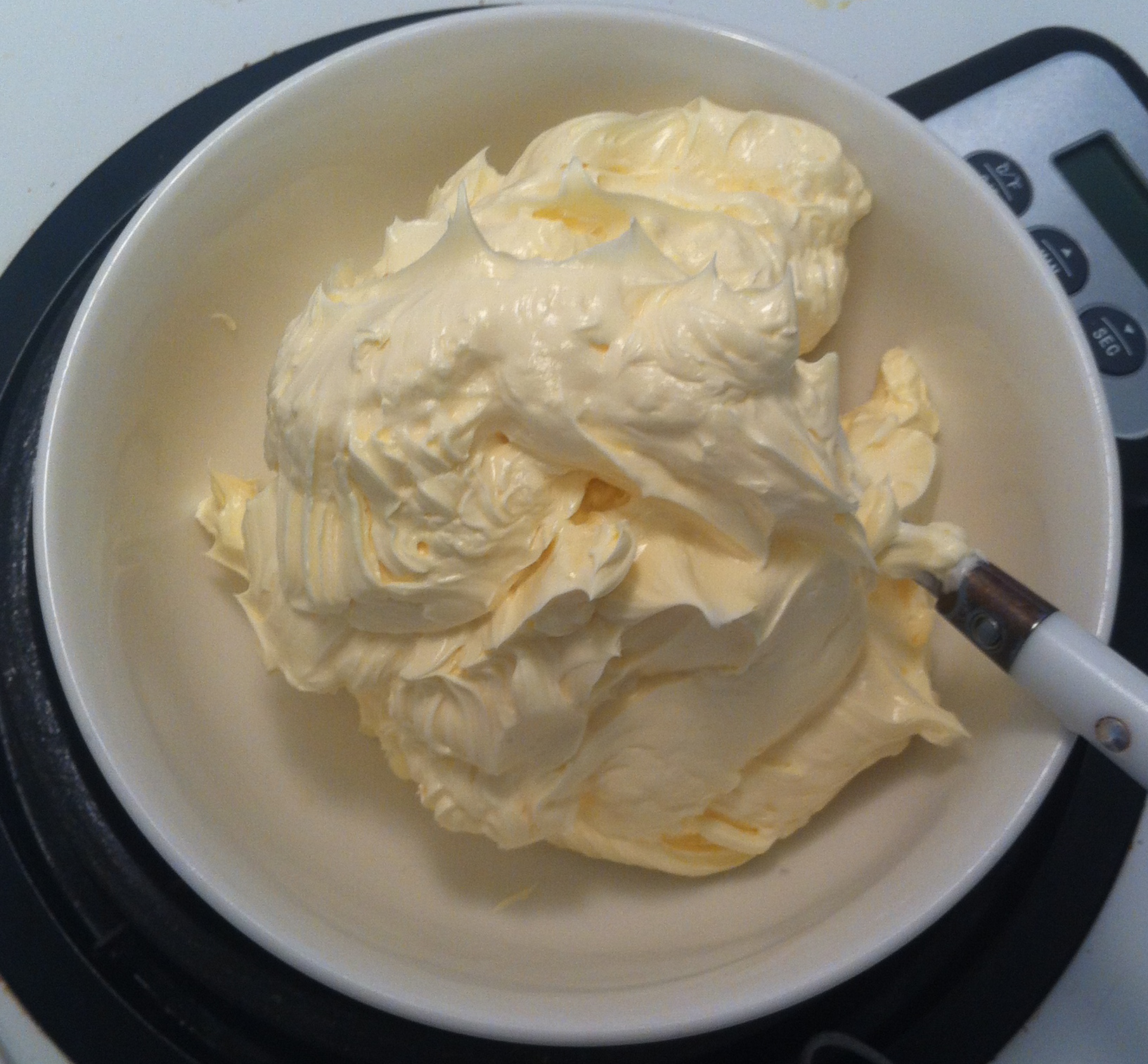
Place the sugar, salt and eggs in a double boiler (just place them in a heat proof bowl and then place the bowl over another bowl of simmer water, make sure not to let the bottom of the first bowl touch the water). Gently and continuously, whisk the mixture while it heats up. Using a thermometer check the temperature of the mixture periodically. When the temperature reaches 160 F, take the mixture of the heat. Now beat the mixture at high-speed until it becomes fluffy and airy and reaches room temperature. Then add the butter in, half a stick at a time, beating continuously at medium speed. Once the butter is whipped in, separate the mixture into two equal parts in two bowls.
In the first bowl beat in the espresso at high-speed until you have a really light fluffy frosting.
Next, cut the cake in half. (Ideally, when you bake the cake, bake it in two separate bowls so that you have two layers without having to slice the cake in half later). Using a spatula spread a thick layer of espresso frosting over the top of the bottom layer. You don’t have to worry about doing this neatly. Make sure to leave aside about 3-4 tablespoons of frosting to decorate the top of the cake with. Then place the top layer of the cake on top of the frosting.
In the second bowl, beat in the vanilla essence, until you have a smooth, fluffy texture.
Using a separate spatula, spread this over the top and sides of the cake. Once you have a somewhat smooth (it does not have to be flawless) surface, use a basting brush to draw fine decorative lines along the sides and top of the cake. Finally, fill some of the left over frosting into a frosting bag and squeeze little bits of it on the top the cake in whatever pattern you like.
And there you have it, a white vanilla butter-cream frosted cake with a creamy espresso layer in the middle. Mmmm.
Mine turned out a little lopsided 😦 clearly I have to work some more on my decorative skills. However, it tasted pretty darned good and got rave reviews at my party 🙂
Sometime ago, I wrote about how relatively easy it is to make refried beans. Now that I’ve figured out a recipe for beans that works for me (and by that I mean that it is a wholly vegetarian recipe and it’s super-spicy) I’ve been making refried beans a lot lately. My favourite ways to eat beans include: beans on top of rice, beans inside burritos and quesadillas, and even just beans on more beans with lots of cheese on top 🙂 But now, my new favourite way to eat beans is on a pizza!
One evening, a few months ago, I had this brain wave: mixing Mexican spicy deliciousness with the most delectable and beautiful carb-related food invention in the world, namely, thin-crust pizza. I’ve been eating way too much pizza ever since.
If you want to try it out, here’s what you will need:
1. Pizza dough
2. One serving of re-fried beans, go here for my recipe.
3. One onion, sliced
4. Freshly grated aged cheddar, to taste
5. Chunks of mozzarella, to taste
6. 1-2 tbsp cayenne pepper
7. 1 tsp freshly ground cumin seeds
8. 1 red or yellow bell pepper, chopped coarsely or cut into slivers
9. 1 jalapeño, sliced horizontally
You can make your own dough, and if you have the time, I would recommend doing this. I didn’t make my own this time though. You see, I was really excited about the idea of this fusion pizza, trying to work out the various toppings I’d put on it, and I didn’t want to wait any longer than I had to. So I ran out and got some fresh dough from the deli-section of the supermarket.
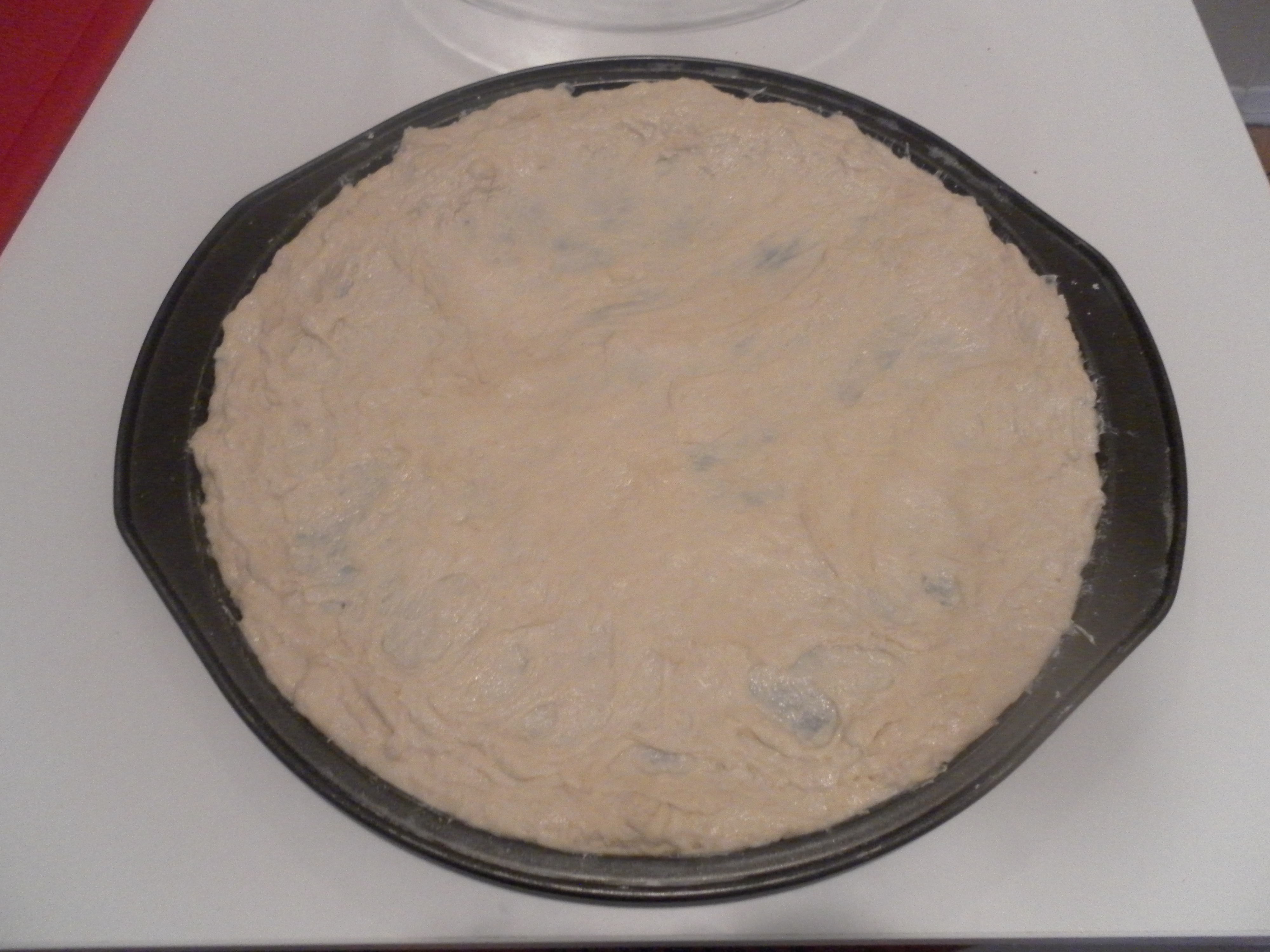
I left the dough out on the counter to let it warm to room-temperature and buttered and floured a pizza pan (you should use a pizza stone if you have one). About 30 minutes later, I set the oven temperature to 360 fahrenheit, sprinkled a spoonful of flour on the counter and began working with the dough. After kneading it a bit on the counter I made the dough into a ball, flattened it gently, and kept pulling it apart, all the time moving it around and flipping it over so that it wouldn’t stick to the counter. When I’d pulled it and stretched it into something resembling a circle, I placed the dough on the pan and then slowly and patiently spread it out to the sides of the pan:
Because I wanted a thin crust pizza I made sure to spread the dough as thin as possible. However, I like a slightly thicker crust along the edges, so I made the outer edges thicker.
Next, I sprinkled some sliced onions on this and popped it into the oven for about 12 minutes, until it looked liked this:
That is, it was slightly cooked and the base had risen a bit. You can see little bubbles; I am given to understand that this is a good sign for a pizza base 🙂
Finally, I spread the refried beans on the base with a knife and topped this off with the rest of the sliced onions, bell pepper slivers or pieces, jalapeño slices, and cheddar and mozzarella cheeses.
It’s also fun to play around and make a multi-topping pizza. I did a pizza tonno combined with the refried bean pizza the very next day:
I popped the pizza back into the oven once I was done with the toppings, and let it bake for another 10 minutes, until the cheese had melted and the onions had crisped a bit.
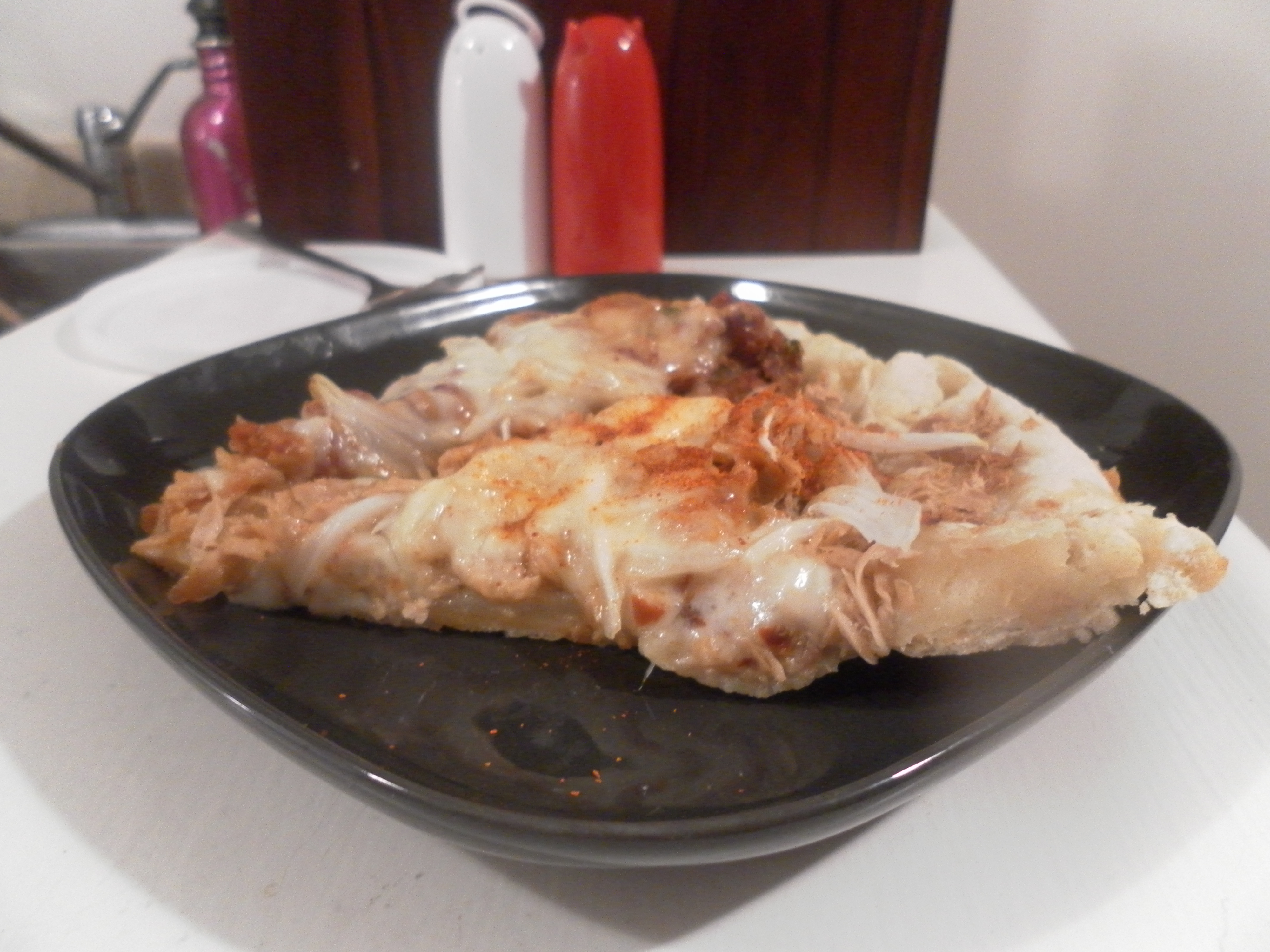
You’re wondering why a (large) third of the pizza is missing aren’t you? It’s because I had to eat some of the pizza as soon as it came out of the oven, while it was still hot! The side-effects of my greed were: burnt fingertips and a picture of an incomplete pizza.
I would advise you to give the pizza a few minutes to cool; it’ll also be easier to cut and serve when it’s isn’t sizzling and just out of the oven.
Don’t wait too long though, it’s best eaten hot. Cut yourself a slice or two, sprinkle some cayenne pepper and cumin powder on top and you’re ready to eat!
I love the spicy, cheesy, softness of the pizza centre melting and folding away, leading up to a freshly baked, thicker, crisp edge..mmmm.
My very first post on this blog was about a Nutella cake. While baking that cake, I used a recipe from Nigella Lawson’s book, ‘How to Be a Domestic Goddess’, as a guide. I really liked that cake, as is evident from my post about it, but there was one thing about it that bothered me. I didn’t like the fact that the cake called for Nutella, which is after all a processed food from the supermarket. I’d rather make a cake from scratch, or as close to from scratch as is possible for someone who lives in a little apartment in a big city. That way, I have a little more control over what goes into it. Last week, I tried making a more ‘wholesome’ and ‘homemade’ option as it were, based off a recipe from ‘Baking Illustrated’.
How did it turn out you ask? Well see for yourself:
Truly, I liked the taste of this cake even better than my earlier attempt; the big bonus of this new recipe is that the cake turns out even more hazelnutty, which is GOOD, because hazelnuts are heavenly 🙂
If you want to make this cake too, here’s what you will need:
Equipment:
A 23 cm or 9 inch spring-form pan, two large bowls, two smaller bowls, a hand-held or stand-alone mixer or a whisk, a food-processor or mortar and pestle, and a tea towel.
Ingredients:
For the Cake:
6 free range eggs (I insist on free-range after seeing some horrific videos of how chicks and hens are treated in “egg factories”.
A pinch of salt
1 stick of unsalted butter
200 g hazelnuts
1 cup granulated sugar
2 tablespoons all-purpose flour
175 g dark chocolate (at least 70% cocoa solids)
For the Icing:
150 ml heavy cream or whipping cream
150 g good quality dark chocolate (at least 70% cocoa solids), chopped
2-3 Tablespoons fo Frangelico
A pinch of Salt
2 handfuls of hazelnuts
A half cup or so of dark chocolate flakes (you can make these by using a paring knife or a vegetable peeler on some dark chocolate).
Preparing the Ingredients:
To begin with, I made sure to lay all the ingredients out on my dining table. When you’re baking, unless the recipe otherwise specifies, it is best to use all ingredients at room temperature. Next, I turned on the oven and preheated it to 350 degrees Fahrenheit.
Preparing the hazelnuts: I toasted the nuts (both those you need for the cake and those you need for decorating the top of the cake) in the oven at 350 Fahrenheit for about 10 minutes, tossing them once or twice in-between. Once they were lightly browned and I could smell the delicious hazelnutty aroma, I took them out of the oven and let them cool for a bit. Then, I placed them in a tea-towel and rubbed the nuts against each other until their skins peeled off.
Next, I put 200 g of the toasted and skinned nuts in a food processor, along with 2 tablespoons of flour and 1/4 cup of sugar and processed them till fine (you could also use a coffee grinder or mortar and pestle).
Preparing the chocolate: I melted the chocolate in a microwave, taking care to use a low heat setting, so as not to burn the chocolate.
Preparing the eggs: I separated the egg yolks from the whites, placing 5 egg whites in a large bowl and 6 egg yolks in a smaller bowl. (You can throw away the extra egg white or use it in a face or hair mask.)
Some people think separating the egg white and yolk and beating them separately is a waste of time, but it isn’t if your recipe does not call for baking powder/soda. This is because all the air in your cake will have to come from the egg whites, since there is no chemical raising agent added to the cake.
I was now ready to begin! What follows are step-by-step instructions to re-create the rich nutty cake I made today! Enjoy!
Method:
1. Place the butter in a large bowl and beat until fluffy. Next, add the remaining three-quarters of sugar, one-quarter at a time, until creamy and almost white. Now add the egg yolks two tablespoons at a time, beating well throughout. Next, add the melted chocolate (which would have cooled a bit by now) and beat the mixture until the chocolate is blended in. Then, gently stir in the hazelnut meal that you have already prepared in the food processor.
2. Now we beat the egg whites; this is the slightly tricky part of the recipe. Add a pinch of salt to the whites and then beat them until they are ‘stiff but not dry”. What this means is that you want to be able to make the foamy whites rise to a peak with your finger.
Stiff egg-whitesAnother way to test this is to take a clean dry egg and try to float it on top of the egg-white foam. If it sinks you’re not done. If it floats completely you’ve overdone it. If it sinks just a quarter of an inch, well you’re egg-whites are perfect then! Make sure the bowl and the whisk you use are perfectly clean, i.e. they are free from oil and water.
3. Once the egg whites are ready, add a dollop of the egg-white-foam to the mixture from step 1 and mix it in. Next, very gently and with a light hand, fold in the rest of the foam. This is important; don’t be rough at this stage; because we want to preserve the airy-ness and lightness of the foam. Here is a video that shows you how to do it:
4. When you’re done folding the foam in, pour the batter in a greased and floured 9 inch or 23 cm springform pan.
5. Slide the pan into the oven and set the timer for 50 minutes. I would go and check on the cake toward the tail-end of this period, say around 45 minutes in. The cake is done when you can insert a tooth-pick gently into the cake, about halfway between the centre and the edge of the cake, and it comes out clean when you pull it out.
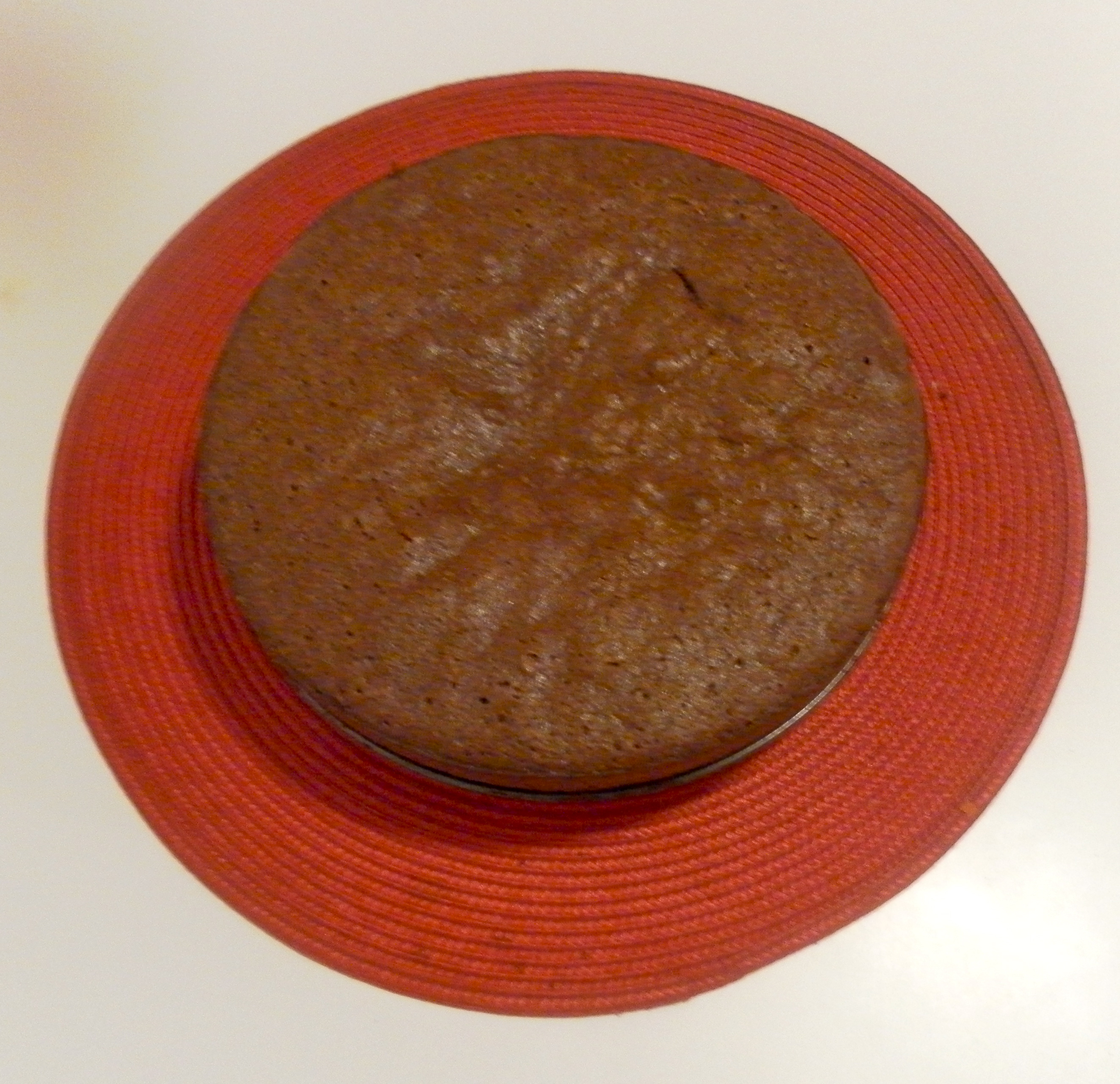
6. When it’s done, take the cake out and cool it on a cooling rack. Once it has cooled remove the sides of the pan.
(At this stage of the process, I already noticed one thing that was better about this cake when compared to my earlier Gianduja cake. The surface of this cake was smoother; there were no cracks on this cake at all. Also, it was more evenly baked. (The small nick visible in the picture was made by me with a knife, it wasn’t a crack on the surface.)
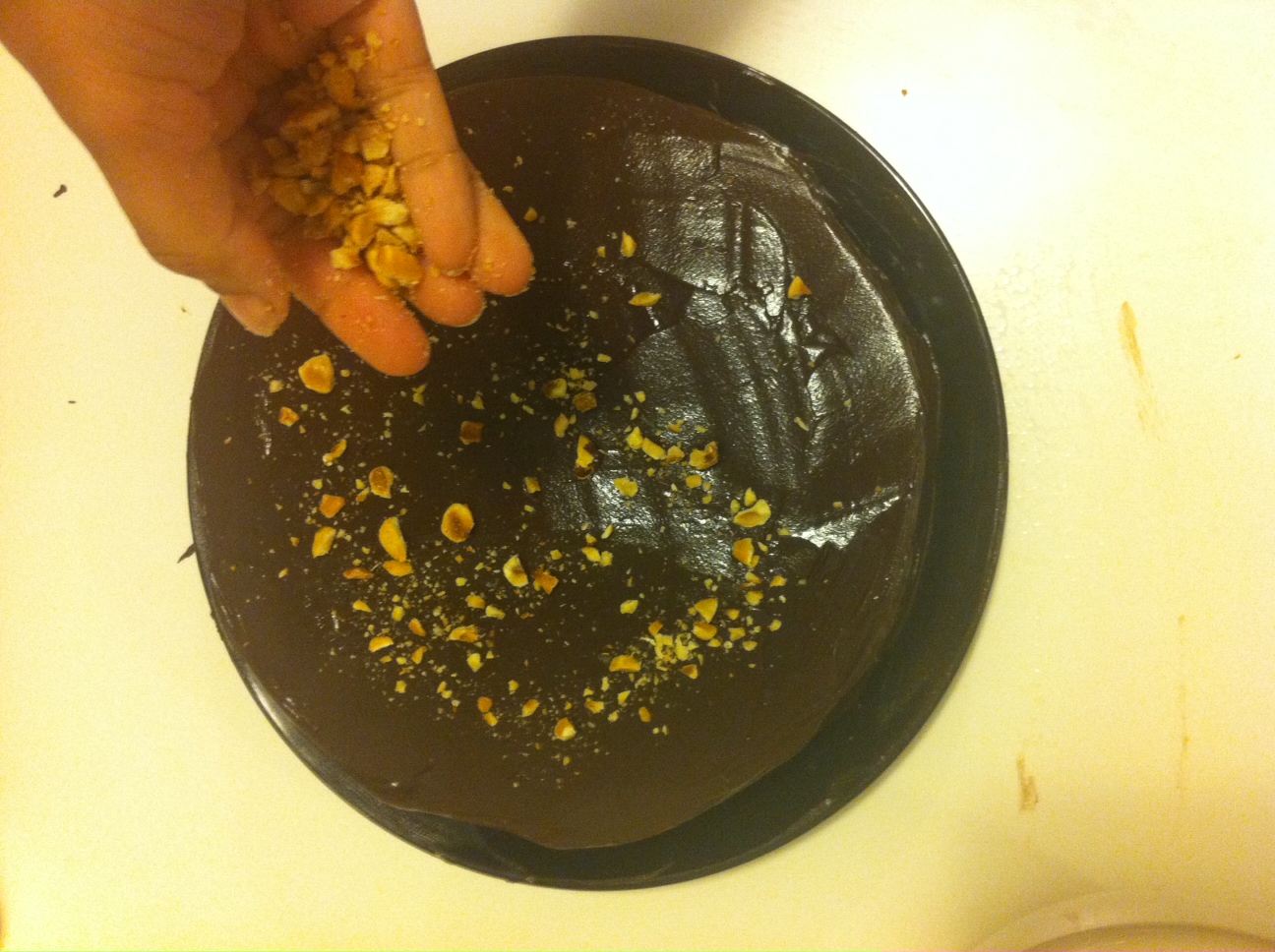
7. Now the cake is ready and it’s time to make the icing! Heat 150 ml of cream and 150 g of chopped chocolate in a saucepan over low heat. Once it’s melted, add a pinch of salt and the Frangelico. Mix and let the ganache sit on the counter and cool for a bit. In the meantime, take the 2 handfuls of hazelnuts you toasted earlier, and crush them in a mortar or pestle or processor. I like to crush them into small chunks, you can choose to crush them more finely, or coarsely, whatever works for you.
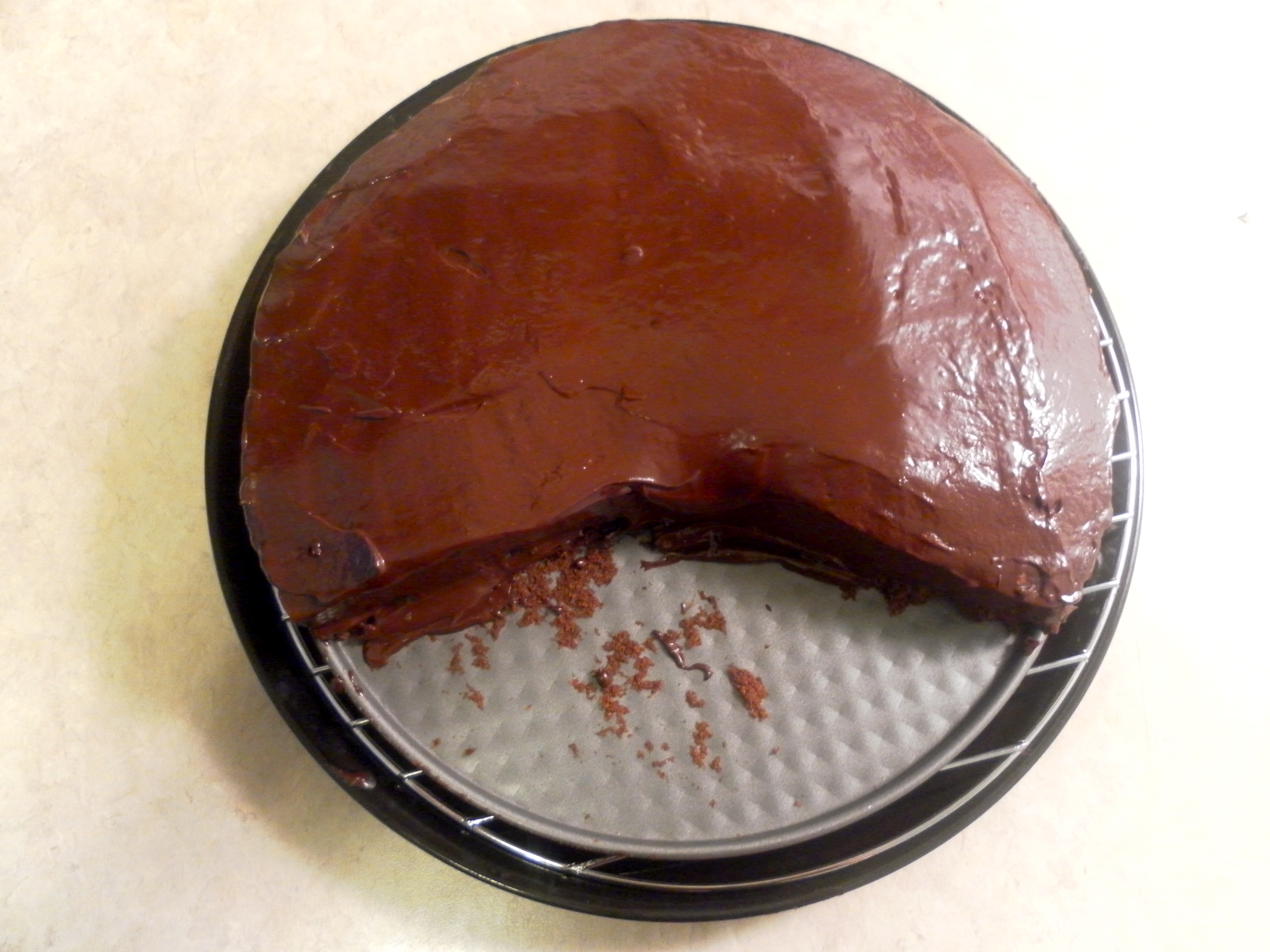
8. Once cooled a bit, pour the ganache over the cake and spread it evenly over it, using an icing spatula or a large, broad knife.
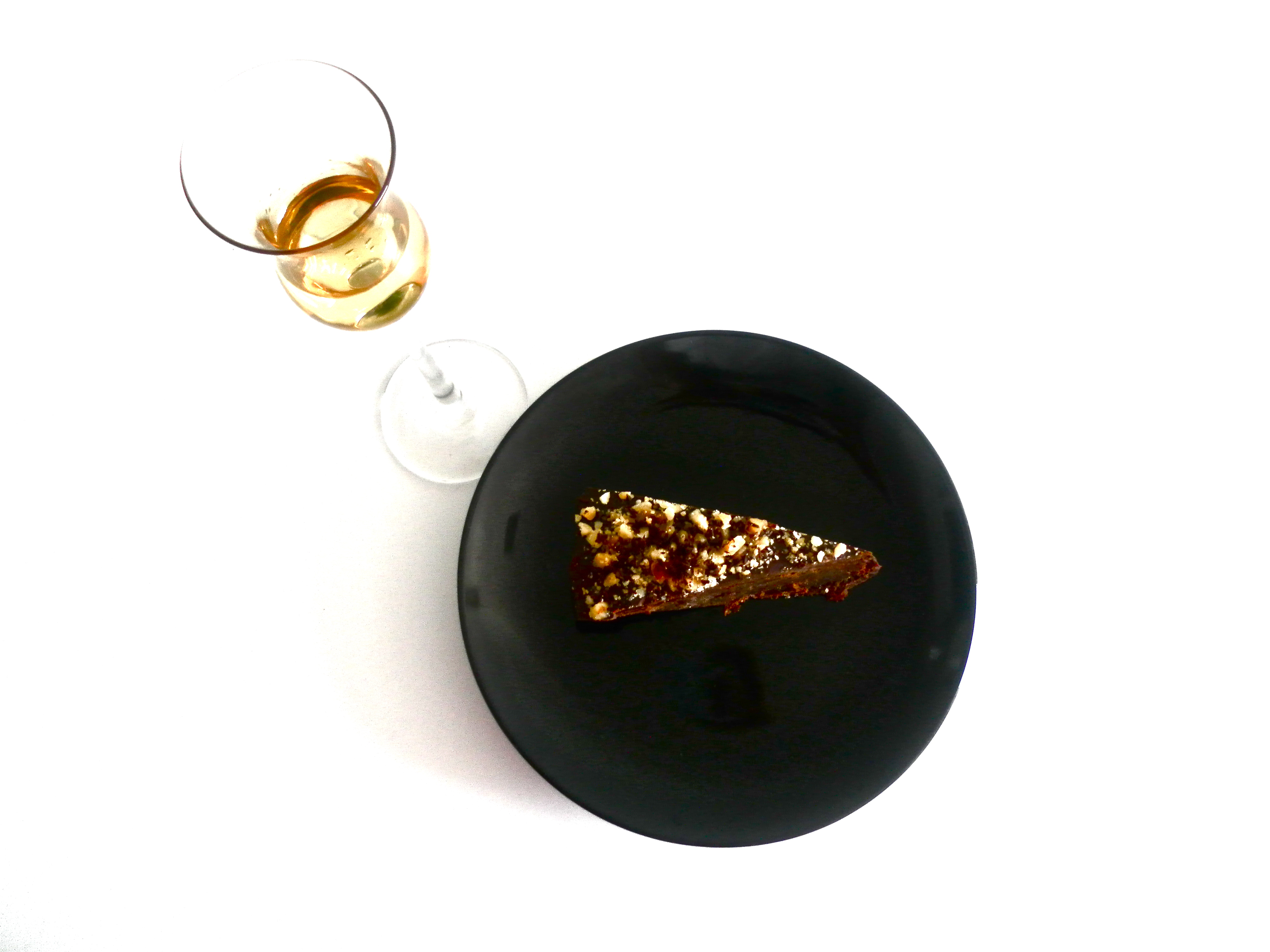
I couldn’t glaze the cake until the day after I baked it because I had errands to run. Mysteriously, more than a quarter of the cake just disappeared overnight, so I ended up glazing the left-over part of the cake 😛Next, garnish the cake with crushed hazelnuts and dark chocolate flakes and serve with a shot of Frangelico 🙂
This rich hazelnut cake tastes best when served with FrangelicoAlso, a little tip, if you’re going to store the cake for a while, make sure to heat it up quickly in the microwave when you take it out of the fridge. Just heat for 20-30 seconds on a low setting; both the cake and the icing taste waaay nicer that way.
Mmm this cake was utterly delicious, it’s totally worth the effort of baking it, I promise!
I am taking chocolate fudge cupcakes to a friend’s birthday party tonight! I baked them late last night and took a break from work this afternoon to frost them. I decided to fill them with dark chocolate ganache and top them off with either Gianduja chocolate frosting or Peanut butter-cream frosting. I will write about how the cakes turned out soon enough, this post however is all about the ganache. More specifically, it is about how to break a chocolate ganache and then, fix it. Why, you ask, would you want to know how to break a ganache? Well, because then you’ll know what not to do when YOU make your next ganache, of course. And if you manage to break your ganache in a unique and entirely different manner than the one chronicled below, why then read on, and you will find how to fix it!
A dark chocolate ganache should taste smooth and rich. This is how it should look:
This is how a chocolate ganache ought to look; a broken ganache will look oily and goopy not smooth and even like this.Unfortunately for me, things went horribly wrong. I ended up with an awful, goopy, oily mess. I didn’t take a picture of it, but here is a link to someone else’s photograph of a ruined ganache that looks very much like mine did.
I think this might be because I added cold vanilla extract from the fridge, when in fact, I should have ensured that it was at room temperature.
I panicked and tried various ways of fixing it. First, I heated it on low in the microwave. When that didn’t work, I tried heating it in a double boiler. Finally, I tried to fix it by adding a few tablespoons of warm milk one at a time. After each table-spoon, I gently stirred the mixture with a whisk. And Voila! It worked! Here is what I ended up with:
Fixed, but slightly thin, ganacheIt is smooth and even, the way it out to be. However, the mixture is a bit thinner than my previous ganaches have been. It’ll firm up in a bit I am sure, and since I am using it as a filling for cupcakes this might even be a happy accident, as it might be nice to have a softer filling inside the cakes. On the other hand, if I was going to be making truffles with this ganache, I might have a problem on my hands.
Ps. I washed my hands before I dipped my finger in that ganache!
I am somewhat infamous amongst my friends and family for my chocolate obsession (it’s not hard to see why). As a result, my friends often send me chocolate-related recipes by email, Facebook etc. I am always grateful for these messages from them, if nothing else because it means they thought of me. But last week, my friend Zoe posted a link for a chocolate mousse recipe on my Facebook timeline that has entirely changed the way I look at chocolate!
When I first saw the recipe, I thought it seemed too simple to be true. Despite my skepticism, my curiosity got the better of me and I decided to give it a try sometime in the near future. As it turned out, I woke up today to find I was out of the Cointreau chocolate truffles I recently made, so, desperately needing my chocolate fix, I decided to try the mousse recipe out. The method employed in this recipe was invented by Herve This, who is a French chemist and, well if you ask me, also a French magician! It turns out this truly is a miracle method/recipe! I am not just being hyperbolic; I mean it. Here’s why:
1. The basic recipe has only has two ingredients: chocolate and water.
2. Although this point is essentially redundant given point 1, I just want to emphasize the fact that the recipe does not call for cream, butter or sugar! So it is pretty low-fat and healthy, for a chocolate mousse recipe.
3. The process is fairly simply, all it needs is a bit of whipping.
You’re amazed aren’t you? Well give it a go, I promise it’s easy and the result is delicious! But before I go on, I just want to add a little caveat to all this. I say this recipe is low-fat because it doesn’t call for cream, butter etc. Having said that, it is still a chocolate mousse recipe. Even though it contains only chocolate and water, chocolate, even dark chocolate contains quite a lot of calories. So this mousse is still considerably more fattening than say just eating some fruit for dessert. So eat it in reasonable quantities.
(I know, I know, you’re calling me a hypocrite now, but YOU, my dear reader can, and should, aspire to a healthier, more sane lifestyle than I adopt, surely!)
I used Heston Blumenthal’s recipe as a base but changed the quantities a little, and added Cointreau for a little extra oomph. Here are the instructions for my version:
Equipment:
1 Saucepan
1 large bowl and 1 smaller bowl
Ice
A whisk
Ingredients:
250g good dark chocolate (I used Godiva chocolate with 72% cocoa solids)
220 ml water
2 tbsp Cointreau (you could also use Grand Marnier)
Cocoa powder and finely grated orange peel for decoration
(The exact quantity of water that you will need varies a little with the room temperature in the room and ice bath, and the particular chocolate you use, so you might have to tweak these measurements. Once you try the recipe out, you’ll get a sense of it and you might find you need to add another tablespoon of water, or reduce the water in the recipe by a bit.)
Method:
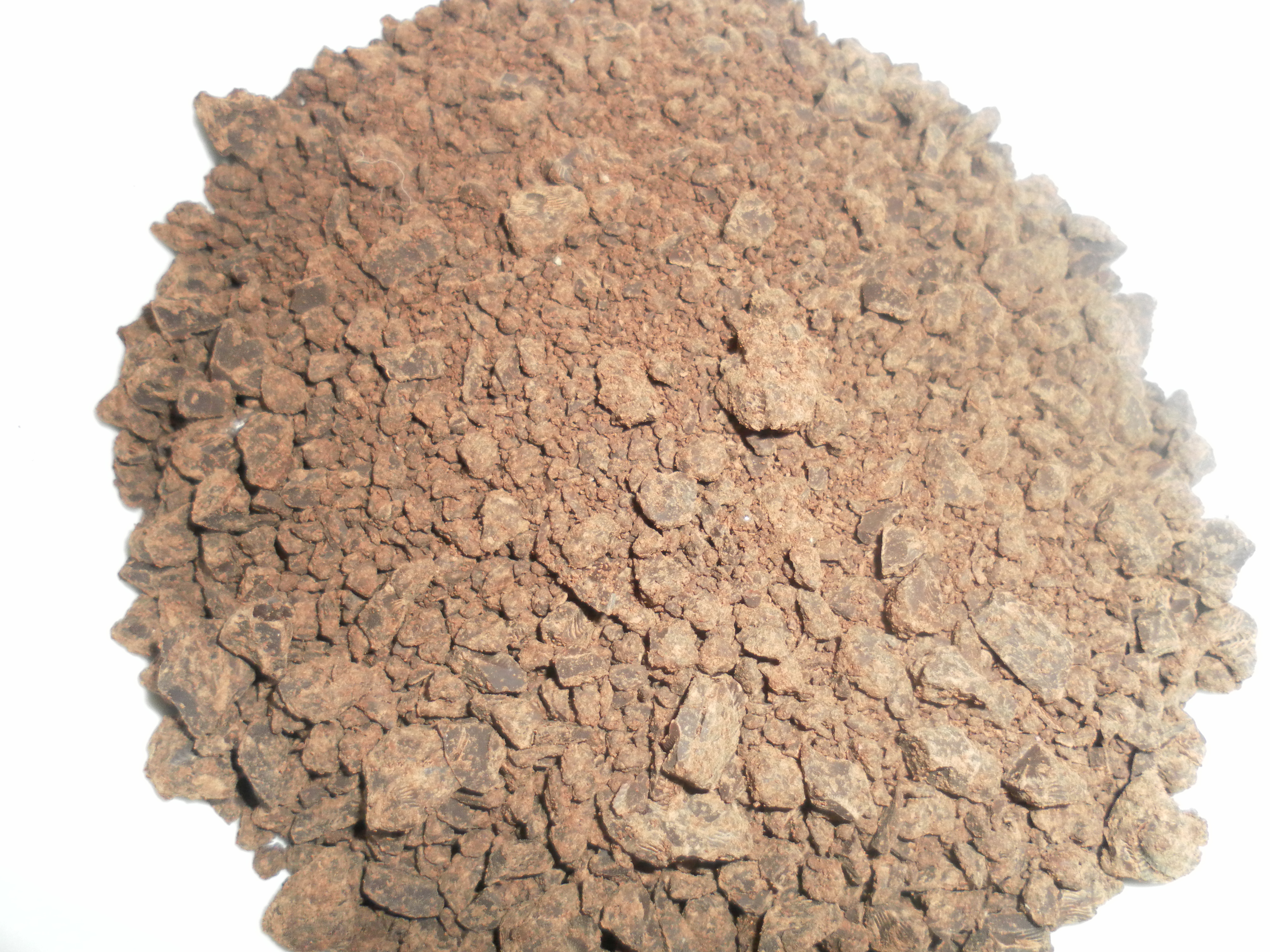
Chop up the chocolate on a cutting board into fine bits with a large knife. I have a food processor, so I just break the chocolate up into individual squares and then throw it into the processor. The reason you want the chocolate broken up into fine bits is because you want it all to melt easily when you heat it. Chocolate burns easily, so you’ve always got to be careful when melting it.
Take the larger bowl and fill it with ice and cold water. Place the smaller bowl in this bigger bowl on top of the ice. The bottom of the smaller bowl should rest on the ice.
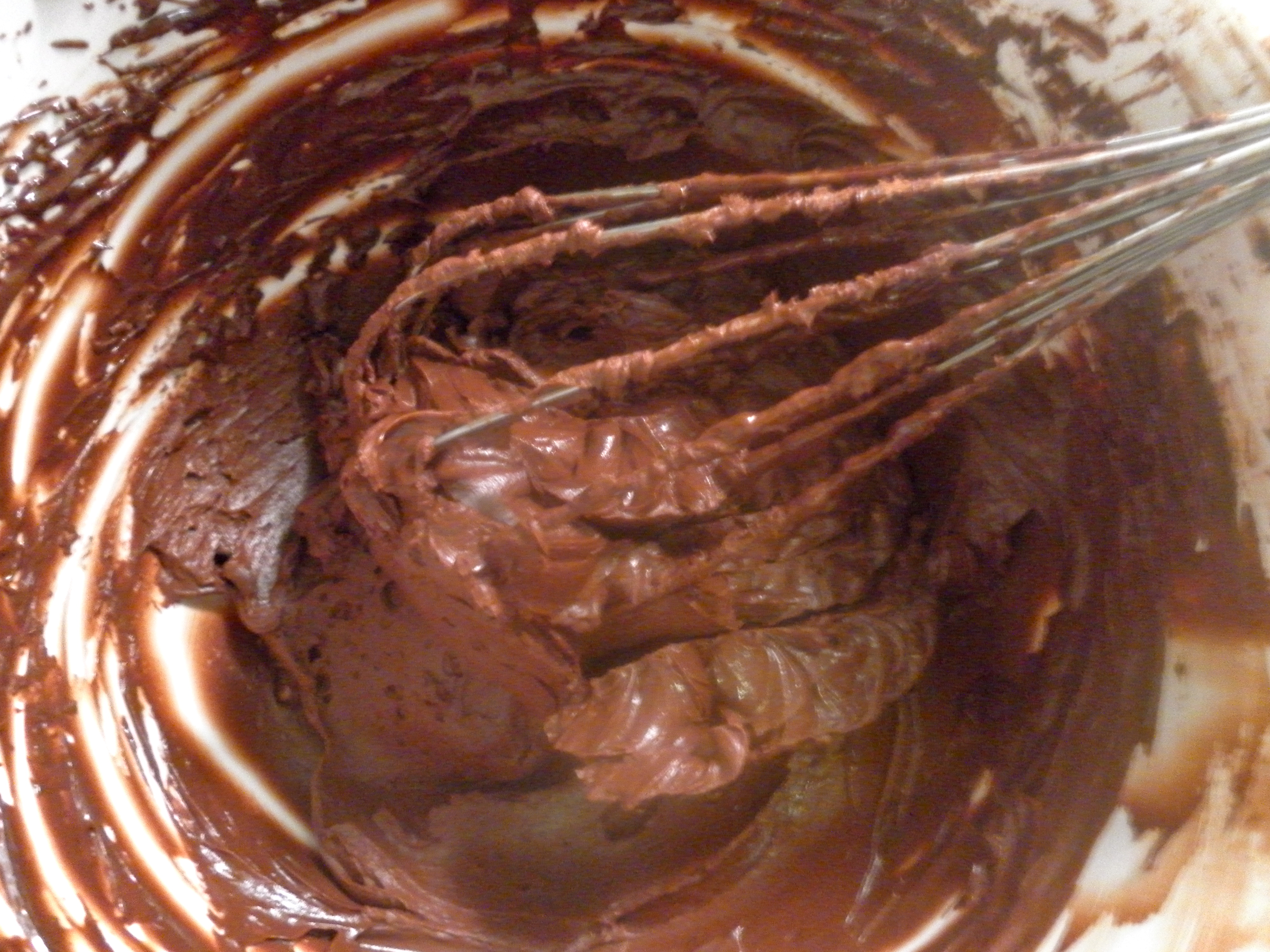
Next pour the water into a saucepan, place the pan on the stove and turn on the heat/flame to low. Now add the chocolate and Cointreau. With the whisk begin mixing the chocolate, liqueur, and water. Once the chocolate is melted, pour it into the small bowl sitting in the ice-bath. Start whisking the chocolate fairly furiously. It will slowly thicken.
Watch the video below to get an idea of how much to whisk it and when to stop (the whisking bit is from around 1.15 to 1.45).
It’s important not to overdo the whipping; if you do, you won’t end up with a mousse-like consistency. I made that mistake the first time around 😦 and I ended up with a dry mess that looked like this:
If you overdo it, you can melt the chocolate again and repeat the whipping process.
When you have the right consistency, you should stop whisking immediately and serve the mousse. I used an ice cream scoop to gorge some out and then served it on a plate like this- lightly dusted with cocoa on top:
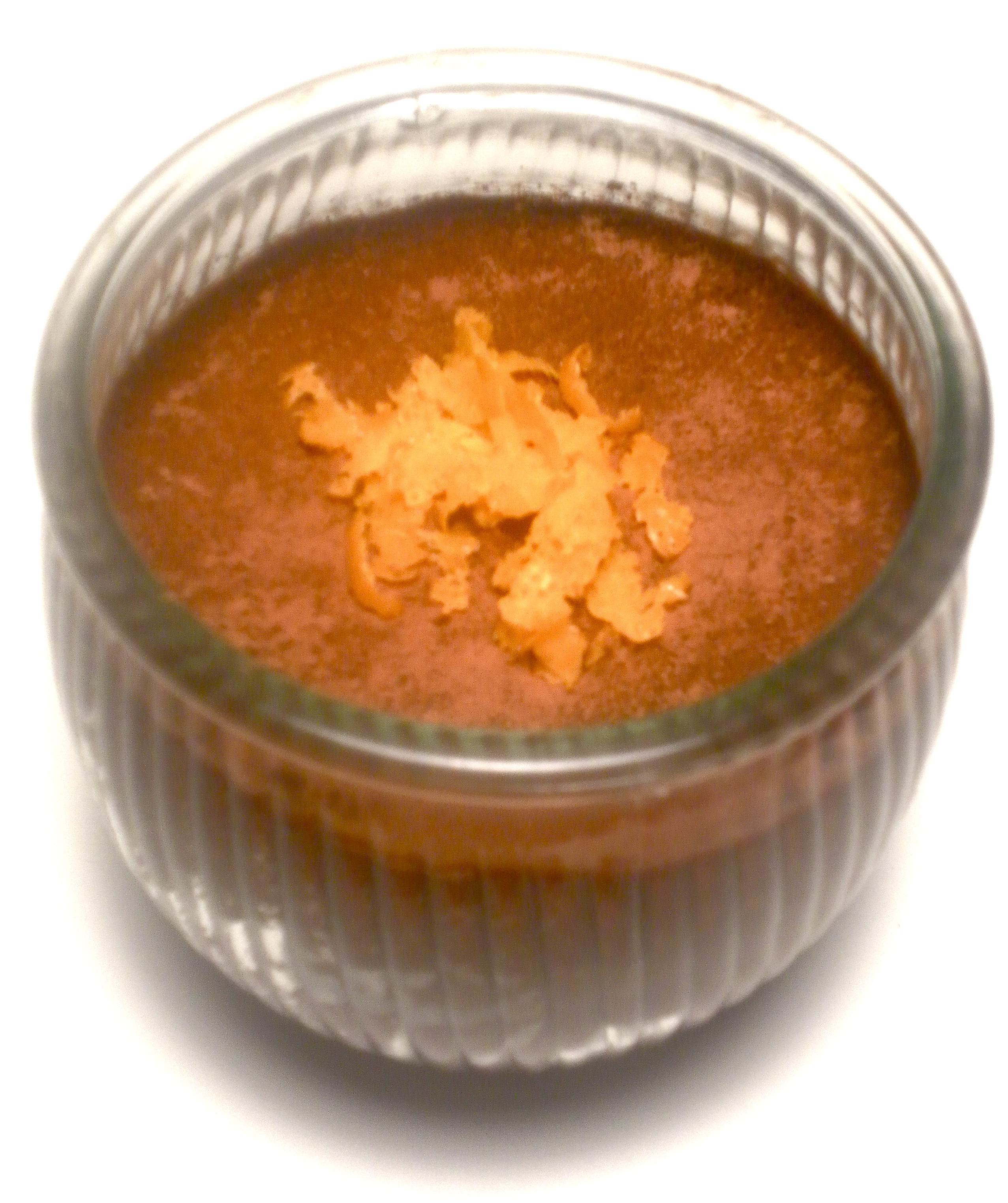
Another option is to scoop into little serving bowls like this. Again, I dusted the top with cocoa powder and then garnished with finely grated orange peel. I’ll probably take of the orange bits before I eat it though, so this is a purely decorative addition.
As much as I love chocolate, I love nutty flavours- not more, not less, just exactly the same amount. Now, while generally the hazelnut has been my nut of choice (although walnuts are lovely too and well peanuts are as unexotic as they are delicious) I think I have a new favourite- the brazil-nut.
In one sense my brazil-nut love-affair began a long time ago. The body shop has these rich, creamy body-butters and my favourite has always been their brazil-nut body butter. It’s absolutely delectable. Anyway, although I loved this body-butter, I’d never really eaten a brazil-nut before, or baked/cooked with these nuts. Then, one lovely summer weekend, my awesome father came to visit. It was wonderful to spend time with him and we walked and talked together, all over the city. As always, he wanted to get me something special as a parting present as it were, and we settled upon a food processor. This is now my favourite toy. It’s amazing and it makes life SO much easier. I shall rant about said toy in another post though, this post is about brazil-nuts.
Anyway, the first thing I decided to make with my processor was home-made nutella. And this project turned out quite well indeed. So well in fact, that the next day, I was out of butter. This time I decided to be adventurous. “This body-butter smells delicious”, I said to myself, “if I like these lotions and potions because they are inspired by food that I love, does it not follow that I would love the food that inspired my most treasured skin-concoction of all??!!”
So I went to the store and bought 100 g of Brazil-nuts. This is what they looked like:
I used only 100g because I wasn’t sure how the experiment would turn out. Here is an account of how things turned out:
Other ingredients I used:
About a cup of icing sugar (it’s important to use icing sugar and not any other kind because you don’t want discrete crystals of it in your butter. You want the butter to have a smooth texture)
1/2 to 3/4 tsp vanilla essence
A pinch of salt
1 tsp or so of peanut oil
About 100 g of good quality dark chocolate
Method:
I began by toasting the brazil-nuts in the oven at 375 farenheit (that’s 180 celsius) for about 10 minutes, tossing the nuts once during this time. I let them cool, and then placed them in a tea-towel and rubbed them against each other until their skins came off. (This process is a little boring and repetitive, so I recommend watching some television or chatting with a friend while you do this.)
Once their skins were mostly off, I put the nuts in the processor and then just let it run for a while. You don’t need to add any butter or oil at all at this stage. Just let the processor do it’s thing. If you’re wondering which blade you should use, check the processor manual- it should tell you what blade/setting works for nut-butters. The nuts will first be crushed, then they’ll be ground to a fine paste and finally you will find them turning to butter. While the nuts are being processed place the chocolate in a bowl and melt it in the microwave. Be sure to do this on a low setting as you don’t want to burn the chocolate. Ideally, you should melt the chocolate in a double boiler to avoid this, but I find that if I am careful, I can do it in the microwave. Once the nuts are smooth, creamy and buttery in texture, stop the processor.
Add the salt, peanut oil, vanilla essence, half the melted chocolate and a few tablespoons of sugar to the butter. Run the processor. Stop and taste-test. if you feel it needs more chocolate or sugar, add some more and process again. Repeat the taste-test and sugar-chocolate adjustments, if necessary. I think it’s best not to follow a recipe in this regard, but to just wing it. As I said in an earlier post about my “universal dark chocolate icing“, each of us has very particular preferences, so why not try and make something perfectly suited to one’s own palate?
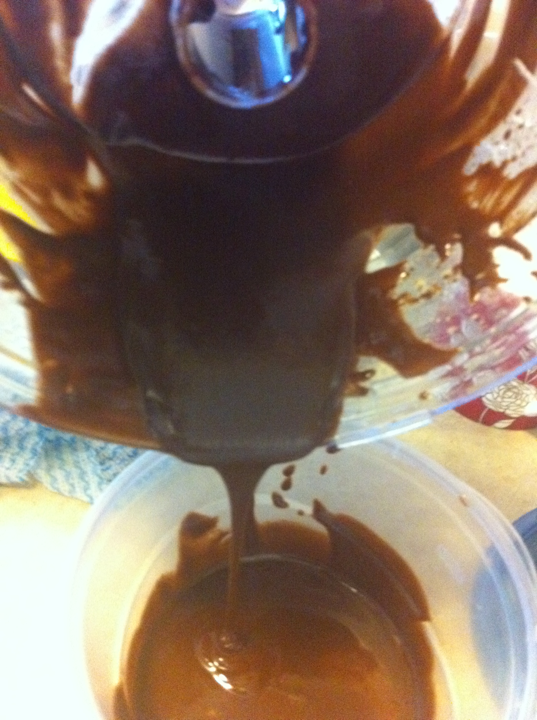
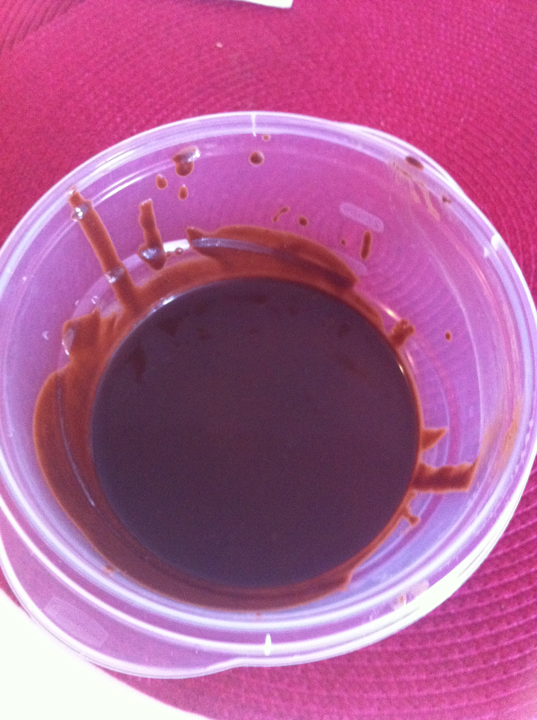
Once you’ve played around with the sugar-chocolate balance and found the perfect equilibrium between the two, and made sure everything has been evenly and smoothly mixed together, stop the processor. The butter will look and smell and delicious as you pour it into a jar or tupperware. Here’s proof of how amazing it looks at least:
“I should have made more!”, I lamented to myself. I really should have. And so should you! Double the recipe!
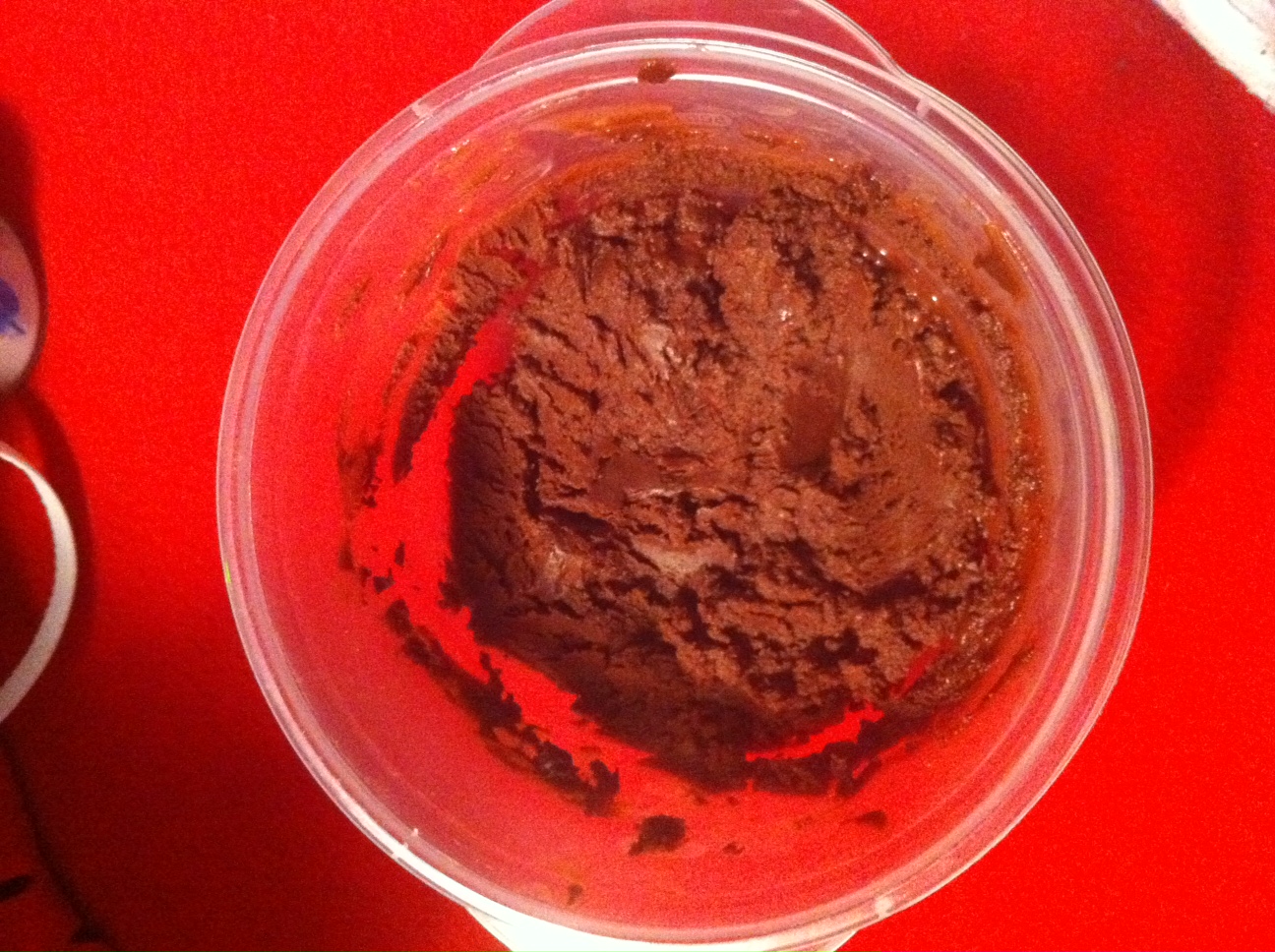
The texture is slightly thin, so if you’d like it thicker so you can spread it on bread etc., put it in the fridge. (I eat nutella with a tablespoon, not bread, so I don’t understand the other half of the population that eat’s it WITH things (unless it’s ice cream they eat it with, THAT I understand).) It’ll look like this once you put it in the fridge.
Ok, not exactly like this. Quite obviously, I got to this with a tablespoon FIRST and THEN realized I should have photographed it. Anyway, you get the idea about the butter’s texture.
All in all, this was deliciousness itself. It tastes absolutely incredible, way better than any nut-butter I’ve tried before.
The lovely teapot I got for my birthday. (Should I be upset I got a teapot for my birthday? I mean young, socially well-adjusted 20 somethingers don't normally get tea-pots for their birthdays do they?)
I am clearly a tea-party goddess! (I mean that in an entirely flip way, being even somewhat snarky about the title of Nigella Lawson’s cookbook (How to be a Domestic Goddess). I am not in fact in the least bit interested in being a goddess and am perfectly aware of the various implications and connotations attached to the use of the word “goddess” especially in a domestic setting. Phew. I just wanted to put that out there, as some of you don’t know me that well, or well, know me at all. Anyway, back to what I was saying..) I had some friends over for tea today, and they seemed to like the nutella cake I talked about in an earlier post quite a bit. In fact, my tea party was such a hit that they stayed until midnight. That is odd for a tea-party, especially considering the fact that I didn’t even serve wine or any other alchocol. So really it must have been the scintillating conversations we had, or my cake 🙂
I just thought I’d let you know that the cake was well-recieved, so, all you goddesses and gods out there who were planning on trying it out, you really should!
After making the Gianduja cake earlier today (see earlier post) I sat down to figure out what sort of icing would work with the cake. As I said in my earlier post, I used a recipe from Nigella lawson’s book, “How to be a Domestic Goddess” for the cake. However, I didn’t really like the sound of the dark chocolate ganache she recommended for the cake. It didn’t sound bad or anything, I mean how can “dark chocolate ganache” be bad, but it didn’t sound perfect to me (I have particular preferences. For instance, I always prefer buttercream frosting to cream-based frosting). Also, I didn’t have enough cream at home. So I decided to wing it, as it were. And this is what I came up with.
What you need:
Equipment:
Mortar and pestle (if you want to add toasted ground hazelnuts on top of the icing)
Spatula or knife to spread icing
A double boiler or a small bowl and a microwave
A food processor or stand-alone mixer OR 1 large bowl and a hand-held mixer or whisk.
Ingredients:
100 g bar of good quality dark chocolate (at least 70% cocoa solids)
A few tablespoons of the heaviest cream you can find (in Canada you’ll have to settle for whipping cream which is about 38% I believe)
1/2 tsp vanilla essense
About a cup of icing sugar
1 1/3 stick of unsalted butter
Two handfuls of hazelnuts
There is a reason these measurements are so imprecise. I just sort of experimented. They say that cooking is an art-form because you can adjust ingredients and spices to taste, whereas baking is science. This is generally true I think, but frosting is a little more on the art side of the scale than baking a cake is. What I mean is you can have an adjustable frosting recipe. I find most frosting to be too sweet and creamy- I would prefer it to be more buttery and chocolately. I also like to put a lot of frosting on my cake 🙂 This is why I have listed approximate measures here.
Preparing the chocolate: Melt the chocolate in a double boiler or microwave.
Preparing the hazelnuts: Toast the hazelnuts in the oven at 375 farenheit (that’s 180 celsius) for about 10 minutes, tossing the nuts once during this time. Let them cool and then place them in a tea-towel and rub them against each other until they lose their skins. Then place them in a mortar and pestle and coarsely grind them. I suggested a mortar and pestle rather than a dry-grinder because this way you can make sure you break up all the nuts without reducing most of the nuts to a powder.
Method:
I began by putting about 3/4 cup of icing sugar into my food processor. I then processed it to get rid of any lumps. Next, I added the butter to this and processed it again, until it was a smooth, creamy mix. If you don’t have a processor just put the sugar and butter in a large bowl and use an egg-beater ( or whisk).
I tasted it at this point and felt it wasn’t sweet enough, so I added a little sugar and then a little more and a little more- until it was just right. I think each person’s desired level of sweetness differs, so this is a great way to make the icing just right for you! At this point, I added the vanilla essence and two tablespoons of heavy cream and gave the whole mixture a nice whirl in the processor. I made sure that the mixture was creamy and light at this point.
The next step was to add the chocolate. I spooned about 3/4 of the chocolate into the processor and processed it.
Upon tasting the icing it I found it needed more chocolate, so I added some more melted chocolate. I also added one more tablespoon of cream to the mix and gave the whole thing a few more whirls until everything was nicely mixed up and I had a smooth, creamy chocolatey frosting.
In the mean time, the Gianduja cake had been cooling on the dining table. I poured the icing at the centre of the cake and then spread it over the cake.
You can get angled spatulas that are great for spreading icing – since I didn’t have one, I used this:
Periodically, I rinsed off the extra icing on the knife in warm water and shook off the extra water. This made it easier to spread the icing.
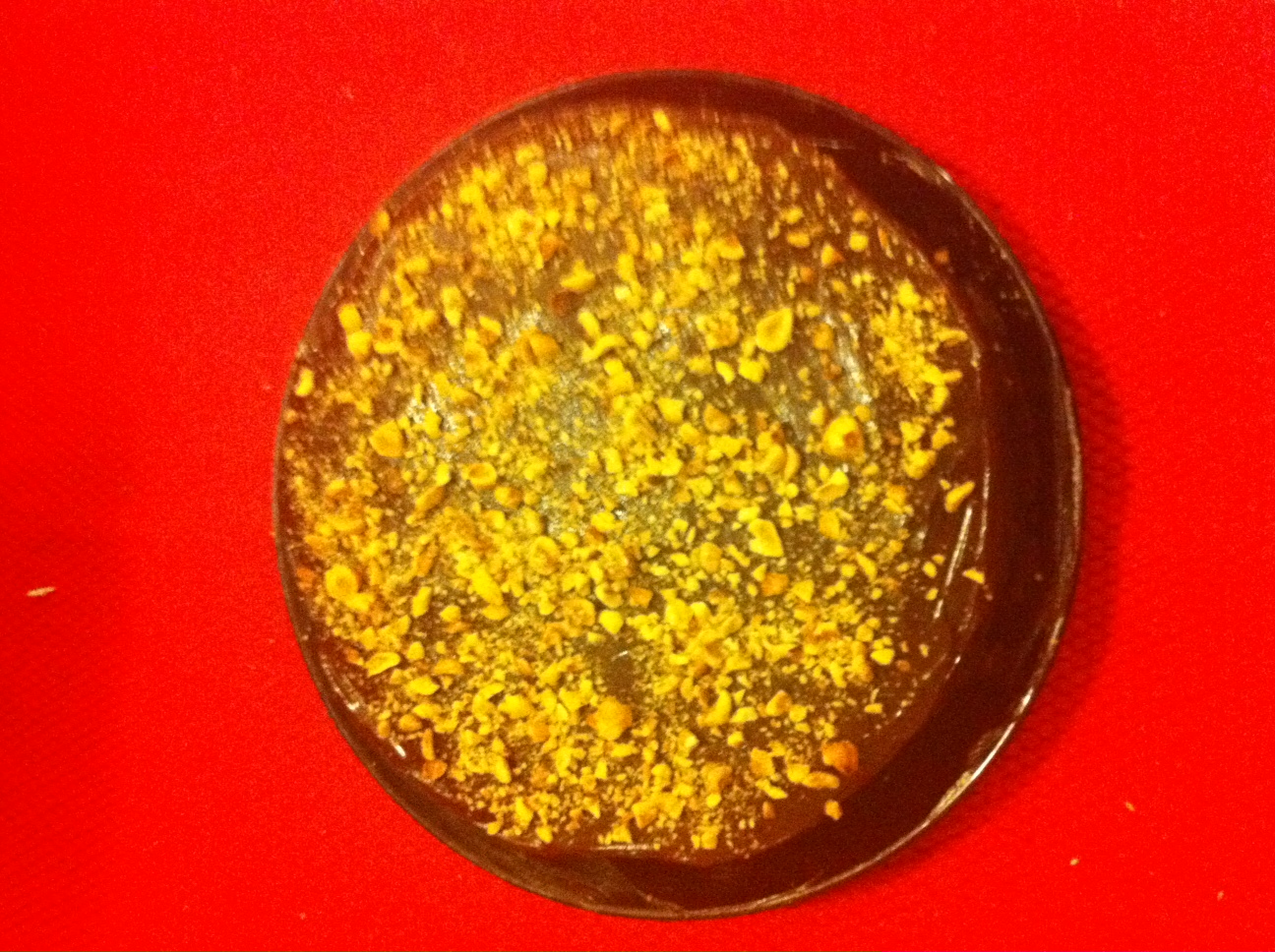
I finally managed to spread the icing somewhat evenly over the cake. It didn’t matter that much if it wasn’t perfectly even because I was going to top it off with nuts. Finally, I sprinkled the toasted, crushed hazelnuts all over the cake.
And the end result was this:
Which my friends will be enjoying tomorrow when I have them over for tea! I already sneaked a piece though, and it was absolutely YUMMY! I recommend this recipe to anyone who likes chocolate and nuts and doesn’t like their desserts overly sweet.
I cannot stress this enough though, this icing tastes best when it’s warm. So reheat a cake slice in the microwave before you serve it.
Ever since I returned from India last week I have been feeling sickish intermittently. I woke up this morning feeling more drained than usual, so in an effort to cheer myself up I decided to bake.
I walked over to the neighborhood Public Library, which, by the way, happens to be 2 minutes away from my apartment, and checked out Nigella Lawson’s “How to be a Domestic Goddess”. I browsed through the book and when I came upon her recipe for “Torta Alla Gianduja”, well I was quite excited to say the least. You see, I have loved Nutella for most of my adult life with an unhealthy, even disturbing fervour and devotion. (I would have loved it as a child, but I grew up in India at a time when “foreign products” were difficult to come by. My parents brought me chocolate from all over the world because they traveled quite a bit, but for some reason they never did buy me nutella. Even peanut butter I only chanced upon when my American cousins brought a jar with them on their visit to India. (Needless to say I was smitten, but that ramble is for another blog-post.))
Back to the recipe, the Nutella cake seemed fairly simple to make- so I decided to give it a try. I modified the recipe a bit, and the icing I used (the recipe for which can be found in my next post) was quite different from the one Nigella recommended. You can find her original recipe here:
What follows is a blow-by-blow account of how the experiment went, complete with amateur pictures taken with my iPhone.
What you will need:
Equipment:
A 23 cm spring-form pan, two large bowls, two smaller bowls, a hand-held or stand-alone mixer or a whisk, a food-processor or mortar and pestle, and a tea towel.
Ingredients:
6 free range eggs (I insist on free-range after seeing some horrific videos of how chicks and hens are treated in “egg factories”.
A pinch of salt
1 stick of salted butter (the recipe calls for unsalted butter, but I like a little bit more salt in my chocolate recipes than most, I find it balances the flavour well. In addition, salted butter is cheaper at the super-market by mine (for some mysterious reason). Therefore, I decided to use salted butter.)
1 375g jar of Nutella
1 Tbsp Jamaican Rum (the recipe calls for Frangelico, but my neighborhood LCBO (for my non-Ontario friends, this is the only store that sells alcohol in Ontario, apart from the beer store and a few random wine stores that sell only Canadian wine) (it’s weird I know!) didn’t have any.)
100 g Hazelnuts
100g Lindt dark chocolate ( with at least 70 % cocoa solids)
To begin with, I made sure to lay all the ingredients out on my dining table. When you’re baking, unless the recipe otherwise specifies, it is best to use all ingredients at room temperature. Next, I turned on the oven and preheated it to 375 degrees farenheit (that’s 180 celsius).
Preparing the hazelnuts: I toasted the nuts in the oven at 375 farenheit for about 10 minutes, tossing them once or twice in-between. Next, I let them cool a bit and then placed them in a tea-towel. Then I rubbed the nuts against the towel until their skins peeled off. Then, I put the nuts in a food processor (you could also use a coffee grinder or mortar and pestle) and processed them till fine.
Preparing the chocolate: I melted the chocolate over a double boiler (you can use a microwave, but be careful not to burn the chocolate then).
I was now ready to begin! What follows are step-by-step instructions to re-create the delish cake I made today! Enjoy!
The first step of the baking process involved separating the whites and yolks of 6 eggs. (Make sure to put the whites in a large bowl). Some people think separating the egg white and yolk and beating them separately is a waste of time. But it isn’t if your recipe does not call for baking powder/soda. Your cake will not rise properly if you don’t beat the whites properly in that cake.
After separating the whites and yolks, add the pinch of salt to the whites and then beat them until they are ‘stiff but not dry”. What this means is that you want to be able to make the foamy whites rise to a peak with your finger. Another way to test this is to take a clean dry egg and try to float it on top of the egg-white foam. If it sinks you’re not done. If it floats completely you’ve overdone it. If it sinks just a quarter of an inch- well you’re egg-whites are perfect then! Make sure the bowl and the whisk you use are perfectly clean- i.e. they are free from oil and water.
Stiff egg-whiteNext, beat the Nutella and butter together, until they are well-mixed and creamy. Then add the rum. Beat. Next add egg yolks. Beat. Finally beat in the ground hazelnuts.
Nutella batter!Then, fold in the dark chocolate. Next, add a dollop of the egg-white-foam and beat it in. Finally, slowly and gently fold in the rest of the foam. This is important- don’t be rough at this stage- because we want to preserve the airy-ness and lightness of the foam. Here is a video that shows you how to do it:
When you’re done folding the foam in, pour the batter in a greased and floured 23 inch springform pan.
Batter in the panSlide the pan into the oven and set the timer for 40 minutes. I would go and check on it towards the tail-end of this period. The cake is done when it starts separating from the sides of the tin. You can do the tooth-pick test to confirm (insert a toothpick gently in and see if it is clean when you pull it out).
When it’s done, take it out and cool it on a cooling rack. I don’t have one so I made a makeshift one:
My cake cooling!And when it’s cooled remove the sides of the pan:
As you can see, I couldnNow the cake is ready! I am off to go make some chocolate ganache to ice it with now. Yay! You can find the recipe for the icing in the next post. Also, a little tip- if you’re going to store the cake for a while, make sure to heat it up quickly in the microwave when you take it out of the fridge. Just heat for 20-30 seconds on low- both the cake and the icing taste waaay nicer that way.
Oh and by the way, since the cake is flour-less it’s gluten-free!





















 The Life and Times of Choconutmeg